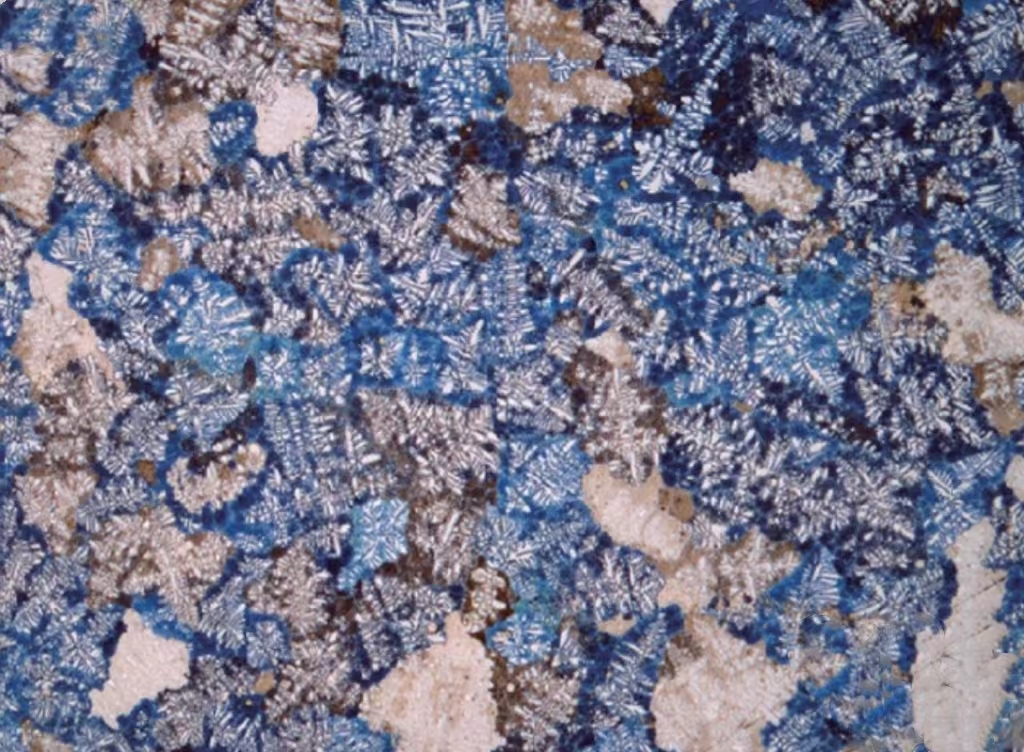
The rapid progress in aerospace engineering places an urgent demand for advanced structural materials that exhibit outstanding mechanical properties under ultra-high temperature operating conditions. While recently developed refractory high-entropy alloys (RHEAs) hold promising application prospects, they are still confronted with challenges, including room-temperature brittleness and elemental segregation, which present significant hurdles in manufacturing processes. Additive manufacturing (AM) technology offers distinct advantages in fabricating RHEAs, such as suppressing elemental segregation, refining microstructures, and enabling the production of components with complex geometries, thereby revealing the substantial research potential. This paper firstly introduces the main technical methods for AM-fabricated RHEAs. Subsequently, it systematically summarizes their microstructural features, elemental distribution patterns, and phase composition characteristics, along with an overview of their mechanical performance at both room and elevated temperatures. To address critical process challenges, such as cracking and porosity in AM-produced RHEAs, we not only review recent research achievements but also propose innovative strategies that combine composition optimization and grain boundary engineering to enhance the AM process. Finally, this paper makes prospects for further enhancing the room-temperature plasticity and high-temperature strength by introducing grain boundary strengthening elements or high-entropy ceramic strengthening phases through additive manufacturing technology in the future, as well as for the preparation of large-sized RHEAs complex components by suppressing cracking and residual stress.
Refractory high-entropy alloys(RHEAs) are widely used in the aerospace field due to their excellent high-temperature performance. This study employs multi-wire arc additive manufacturing(M-WAAM) technology to fabricate Ta1.5Mo1.5Nb0.5Zr2Ti refractory high-entropy alloy. Using equipment such as optical microscopy(OM) and high-speed cameras, the influence rules of base current, peak current, and peak time ratio on forming quality are investigated. The optimal process parameters for preparing the Ta1.5Mo1.5Nb0.5Zr2Ti alloy are determined(base current 100 A, peak current 300 A, and peak time ratio 35%). Metallographic characterization demonstrates that the fabricated components exhibit excellent forming quality, with unmelted area ratio below 10% and porosity less than 0.5%. To address the melting point differences among various wires, hot-wire technology is employed to facilitate the melting of high-melting-point Ta/Mo wires. For the first time, we propose a“single droplet pre-alloyed transfer”mechanism, elucidating the thermodynamic process of discontinuous liquid bridge transition and subsequent formation of a unified molten droplet from four simultaneously fed wires. Based on the thermodynamic mechanism of synchronous four-wire discontinuous liquid bridge transition forming a unified molten droplet, a“single droplet pre-alloyed transfer”mode is established. Parts deposited under this droplet transfer mode demonstrate good macroscopic morphology and fewer internal defects. Through force analysis of molten droplets, we establish a mechanical model incorporating key factors including gravity, electromagnetic force, and plasma flow force, demonstrating that synchronous non-continuous liquid bridge transition of four wires constitutes a sufficient condition for the formation of a unified molten droplet. Additionally, the developed bead width prediction model provides quantitative guidance for process optimization. This work establishes an important theoretical foundation for M-WAAM of RHEAs.
High-temperature high-entropy alloys(HEAs)show potential to surpass traditional Ni-based alloys through multi-principal element synergy and microstructural regulation. This review systematically examines three systems: high-entropy superalloys(HESAs), refractory HEAs(RHEAs) and refractory high-entropy superalloys(RSAs). HESAs emulate the γ/γ′ dual-phase structure of Ni-based alloys, achieving comparable strength at 800-1000 ℃. RHEAs utilize refractory elements to form high-melting-point solid solutions with superior performance above 1200 ℃. RSAs innovate with BCC/B2 nanobasket structures, outperforming Ni-based alloys across 25-1200 ℃. Current challenges include poor room-temperature ductility, oxidation resistance and phase stability, demanding breakthroughs in multi-scale microstructure control, dynamic phase transformation mechanisms and high-throughput design. Future directions prioritize multi-objective composition optimization, advanced processing, cross-scale characterization, and service-condition evaluation systems to guide extreme-environment applications like aeroengine components and nuclear reactors, etc.
High-entropy alloys(HEAs)have attracted considerable attention from the research community as a pioneering alloy design paradigm over the past two decades. They have fundamentally challenged traditional design paradigms and exhibited exceptional mechanical properties and functional characteristics, thereby positioning themselves as promising candidates for significant engineering applications in the future. Recent advancements have unveiled several alloy systems that demonstrate exceptional performance across diverse metrics, including low-temperature fracture toughness, high-temperature strength, impact resistance, radiation tolerance, and fatigue resistance. These qualities render HEAs highly attractive materials for research with substantial application potential in critical domains such as deep space exploration, deep-sea investigations, low-temperature superconductivity, and advanced nuclear energy technologies. This paper will briefly introduce the concept and classification of HEAs, and review the experimental progress of HEAs under various extreme conditions such as extremely low temperatures, high-speed impacts, and high nuclear radiation. We also summarize the strategies for enhancing the strength and toughness of HEAs, and extract the deformation mechanisms and physical and chemical properties of HEAs under different extreme loads. It is foreseeable that the main development direction of HEAs will be to form microscopic fluctuations in chemical composition and construct multi-scalestructural ordering efficiently through fine adjustment of the selection and proportion of alloying elements and optimization of heat treatment processes. For comprehensive studies on HEAs subjected to extreme loads, it is essential to explore their microscopic deformation mechanisms further while proposing innovative strategies designed to address inherent trade-offs between strength and toughness. The integration of state-of-the-art simulation techniques combined with advanced characterization methods will be crucial for improving research efficiency while providing insights into microstructural behavior. Additionally, tailored optimization approaches should be implemented for distinct advantageous systems and phase structures, particularly those capable of activating dislocation movements, twinning, phase transformations and incorporating novel processing methodologies such as additive manufacturing. Finally, conducting more realistic simulation experiments that closely replicate extreme environments along with generating relevant engineering data are vital steps toward accelerating the practical application of HEAs in challenging settings.
The current research status of refractory high-entropy alloys(RHEAs) is reviewed, the composition design of RHEAs is described, and the effects of metal elements and non-metal elements on the structure and properties of RHEAs are summarized. In addition, the microstructure and mechanical properties of RHEAs under different preparation methods are described, and the strengthening mechanism of RHEAs matrix composites is discussed. The future development of RHEAs is prospected, and the following suggestions are put forward for its future research direction: enhancing of RHEAs by multiphase synergistic effects through the interface design between different phases; designing and optimizing the composition of RHEAs to develop RHEAs that are easy to process at room temperature; quickly screening the composition and microstructure of RHEAs by combining with high-throughput calculation methods; regulating and controlling the microstructure and structure of RHEAs by additive manufacturing technology; carrying out the configuration design of RHEAs matrix composites to balance the strength and plasticity of RHEAs matrix composites.
Introducing emerging high entropy alloys materials into advanced intelligent manufacturing for laser additive repair is expected to promote the deep integration of new generation of materials and manufacturing technology and greatly improve the utilization of raw materials and energy, which have broad application fields and excellent development prospects. This paper introduces the application status of high entropy alloys in laser additive repair, and points out that the mismatch of strength and toughness, inaccurate performance control and unclear strengthening mechanism are the key scientific problems that need to be solved urgently in the expansion and application of high entropy alloys in laser additive repair. Exploring the ductile-brittle transition mechanism of the high entropy alloys cladding coating metal, clarifying the basic mapping relationship among the materials, processes, microstructure and coating performance of cladding coatings, obtaining a complete and effective method for predicting the composition of high entropy alloys, innovating the design of alloy powder system, optimizing and adjusting the control processes, and obtaining a high-performance cladding coating suitable for extreme service environment and with low cost are the main research focus and development trends in the future.
The Nb-Mo-Ta-W series refractory high-entropy alloys with composition recombination design were manufactured by laser metal deposition process. The phase structure, defects and microstructure of(NbMoTa)90W10 and(NbMoTaTi)90W10 high-entropy alloys were characterized and analyzed by X-ray diffraction and scanning electron microscope. The tensile properties of the two alloys were tested at room temperature by multifunctional mechanical testing machine. The results showed that both(NbMoTa)90W10 and(NbMoTaTi)90W10 high-entropy alloys are single-phase body centered cubic structures. Ti element forms a "liquid film" at the grain boundaries in Nb-Mo-Ta-W series alloy, which can effectively suppress intergranular cracks. Due to the reduction of metallurgical defects and the lattice distortion effect, the mechanical property of(NbMoTaTi)90W10 high-entropy alloy at room temperature is improved, and the yield strength reaches 1156 MPa.
With the development of aerospace technology, protective materials for hot-end components have reached higher requirements. In this paper, a (ZrxY(1-x/4)Ta(1-x/4)Ti(1-x/4)Er(1-x/4))O(x=0.2, 0.544, 0.672, 0.796和0.92)quintuple element ceramic system composite is studied based on the solid-phase reaction method and molecular dynamics simulation. By experimental means, ZrO2 (99.99%), Y2O3 (99.99%), Ta2O5 (99.99%), Er2O3 (99.99%) and TiO2 (99%) powder was used as raw material to prepare (ZrxY(1-x/4)Ta(1-x/4)Ti(1-x/4)Er(1-x/4))O composite by the solid-phase reaction method. The thermal conductivity of (ZrxY(1-x/4)Ta(1-x/4)Ti(1-x/4)Er(1-x/4))O ceramic material was investigated computationally using the LAMMPS program. The study result shows that a consistent trend in the variation of the thermal conductivity is obtained by experiments and simulations at the interval of 200-900 °C. The thermal conductivity reaches a minimum value at x = 0.796, which proves the feasibility of molecular dynamics simulation of the thermal conductivity of multi-ceramic materials. Meanwhile, the effect of porosity on thermal conductivity was investigated, and it is found that there was a competitive relationship between the elemental ratios and the effect of porosity on thermal conductivity. When the porosity is larger than 6.67%, the effect of the porosity is the main influencing factor. when the porosity is smaller than 6.67%, the elemental ratios are the dominant factors in the thermal conductivity.
A micro-diffusion phase-field model based on the atom occupancy probability of single lattice point was presented to describe the phase transition process, the heterogeneous interface structure and composition evolution of Ni59Al22V19 medium entropy alloy during phase transformation at atomic scale. It is found that in the early stage of Ni59Al22V19 medium entropy alloy precipitation, L12 and a small amount of ordered phase of DO22 and L10 are precipitated. As the aging process goes on, the coexistence of L12 and DO22 is formed in the aging process and four kinds of heterogeneous interfacial structures are found. At the initial phase of phase transformation, interfacial structures of A play a dominant role. With the growth and decomposition of the ordered phase, the number of interfacial structures of A decreases while the number of interfacial structures of D increases; in the Ni59Al22V19 medium entropy alloy the ordered domain boundaries provide Al atoms for the growth of L12 during the precipitation process until the alloy reaches equilibrium. During the precipitation process, the precipitation mechanism of γ′ phase is compositional ordering and instable decomposition mechanism, and the precipitaion mechanism of phase θ is instable; the interaction potential between Ni-Al first neighbor atoms increases with the increase of the long program parameters and is proportional to the temperature, the incubation period of medium entropy alloy in Ni59Al22V19 becomes longer with the increase of temperature.
High entropy alloy is defined as an alloy containing four or more main elements. The atomic fraction of the main elements is greater than 5% and not more than 35%, which has excellent properties such as high strength, high wear resistance and high corrosion resistance. Refractory high-entropy alloy is a new type of superalloy designed and developed based on high-entropy alloy of refractory elements, which has broad application prospects in aerospace, petrochemical and other fields, and is expected to replace traditional superalloys. This paper reviews the composition design of refractory high-entropy alloys from the aspects of element selection and addition of trace elements, and its phase composition has single-phase structure and duplex structure, and the preparation method and performance characteristics of refractory high-entropy alloys are studied, and finally gives the problems and challenges faced by refractory high entropy alloys. This review provides a valuable reference for researchers in the component design, microstructure regulation and performance development of refractory high entropy alloys.
Owing to novel design concepts and their unique properties, high-entropy alloy (HEA) has become a hot topic in material science. At present, the studies and applications of high-entropy alloy are still mainly limited to the preparation and synthesis of materials. With its wide application in industry, it must involve the research of high-entropy alloy in welding field. This paper describes the welding of high-entropy alloy with the same material, welding between high-entropy alloy and dissimilar material, and welding between dissimilar material with high-entropy alloy as filler material. The paper focuses on analyzing the welding method, high entropy alloy components, the initial state of welding and welding parameters, and other factors on the joint organization and properties. While the high-entropy alloy is mainly applied as filler material, the high entropy effect and hysteresis diffusion effect for interface controlling are particularly important. Finally, the high-entropy alloy coatings under different preparation methods are analyzed in detail, introducing the cladding process, the addition of microelements, the effect of post-heat treatment, and comparing the wear resistance high-entropy alloy coatings under the laser melting process. By summarizing the research and application of high-entropy alloy in the welding field, it is pointed out that the current problems are that the corresponding standard between high-entropy alloy system and welding process has not been established and the formation mechanism of defects has not been clarified. The future research directions of high entropy alloy in welding field are proposed.