- 中国科学引文数据库(CSCD)核心期刊
- 中国核心期刊
- 文摘与引文数据库(Scopus)
- 剑桥科学文摘(CSA)
- 英国INSPEC数据库





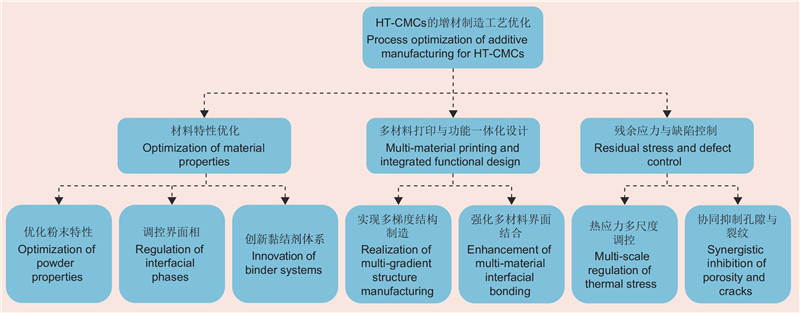
High-temperature resistant ceramic matrix composites (HT-CMCs) have demonstrated immense application potential in aerospace, energy, and other extreme service environments, thanks to their outstanding attributes such as exceptional high-temperature resistance, high strength, low density, and excellent chemical stability. Traditional manufacturing processes are constrained in fabricating HT-CMCs with complex shapes and high performance. In contrast, additive manufacturing (AM) technology has paved a new way for the production of HT-CMCs with intricate structures, leveraging its unique capability of layer-by-layer construction. This technology substantially improves the functional properties and structural efficiency of materials by enabling the direct fabrication of complex internal features, like cooling channels. It also supports performance-oriented precise control and customized production according to specific service requirements, while significantly reducing material waste and effectively cutting down manufacturing costs. This paper focuses on the additive manufacturing technology of HT-CMCs. It introduces the technical principles and current application status of this technology, and places particular emphasis on expounding the latest research advancements both domestically and internationally in material system design, forming technologies, and process optimization for additively manufactured HT-CMCs. Furthermore, this paper sets out the future trends of additive manufacturing for HT-CMCs. In terms of material-process synergy, the focus is on overcoming the bottleneck of interface bonding in multi-material printing and developing composite processes to achieve multi-functional integration and gradient structures. Regarding the construction of intelligent systems, the aim is to establish a “digital control-real-time monitoring-parameter optimization” system and reduce trial-and-error costs through AI-based parameter adjustment. In the realm of modularization and circular manufacturing, the emphasis is on developing interchangeable standardized modules and innovating ceramic waste recycling technologies to enhance material utilization rates. All these endeavors are aimed at promoting its engineering application in cutting-edge fields.
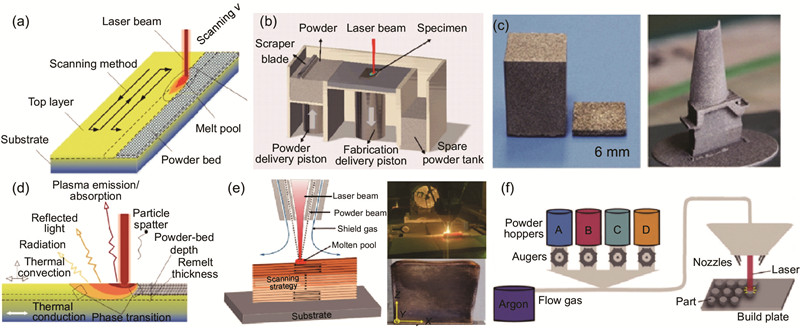
The rapid progress in aerospace engineering places an urgent demand for advanced structural materials that exhibit outstanding mechanical properties under ultra-high temperature operating conditions. While recently developed refractory high-entropy alloys (RHEAs) hold promising application prospects, they are still confronted with challenges, including room-temperature brittleness and elemental segregation, which present significant hurdles in manufacturing processes. Additive manufacturing (AM) technology offers distinct advantages in fabricating RHEAs, such as suppressing elemental segregation, refining microstructures, and enabling the production of components with complex geometries, thereby revealing the substantial research potential. This paper firstly introduces the main technical methods for AM-fabricated RHEAs. Subsequently, it systematically summarizes their microstructural features, elemental distribution patterns, and phase composition characteristics, along with an overview of their mechanical performance at both room and elevated temperatures. To address critical process challenges, such as cracking and porosity in AM-produced RHEAs, we not only review recent research achievements but also propose innovative strategies that combine composition optimization and grain boundary engineering to enhance the AM process. Finally, this paper makes prospects for further enhancing the room-temperature plasticity and high-temperature strength by introducing grain boundary strengthening elements or high-entropy ceramic strengthening phases through additive manufacturing technology in the future, as well as for the preparation of large-sized RHEAs complex components by suppressing cracking and residual stress.
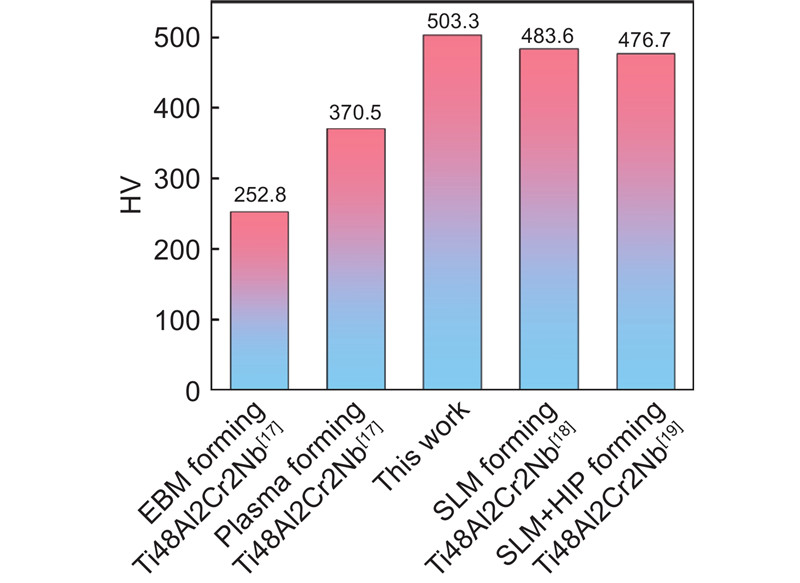
TiAl alloys exhibit poor room-temperature ductility, which poses a challenge for traditional casting and forging processes to fulfill the manufacturing demands for complex structural components. Selective laser melting (SLM) technology, renowned for its short manufacturing cycle, high material utilization, and exceptional forming accuracy, is deemed well-suited for fabricating complex parts in the aerospace industry. In this research, Ti48Al2Cr2Nb alloy powder is mixed with 4% (mass fraction) FeMo60 alloy powder to formulate an alloy with a nominal composition of Ti47Al3.5Cr1Nb1Mo1Fe. By employing a chessboard overlap scanning strategy (which mitigates thermal stress during processing) and optimizing printing parameters, SLM fabrication of the TiAl alloy with a remarkably low defect rate (only 0.49%) is successfully accomplished. Moreover, the samples are characterized using X-ray diffraction and scanning electron microscopy to explore the underlying reasons for microstructure formation. Additionally, a substantial portion of the α2 phase in the as-printed alloy is converted into the γ phase through heat treatment. Simultaneously, the unmelted FeMo60 powder from the printing process is dissolved, achieving solid solution strengthening. This phenomenon leads to a significant 30% enhancement in the compressive strength. This study offers a crucial reference for the preparation of high-performance TiAl alloys with complex geometries.
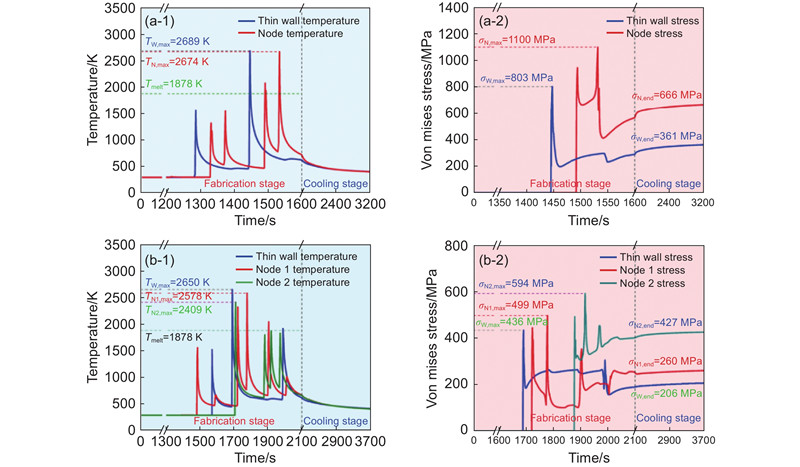
Wire-arc additive manufacturing (WAMM) is an emerging manufacturing technology that employs metal wire as the raw material and arc as the heat source. It offers advantages in fabricating large and complex parts. Nevertheless, it still faces challenges, including prolonged fabrication cycles, intricate path planning, and substantial residual stress. In this study, we explore the optimization of the manufacturing path for wire-arc additive manufacturing when fabricating complex structural components, aiming to mitigate the significant residual stress and strain induced by suboptimal manufacturing paths. Finite element software is utilized to optimize the manufacturing path, and a unit body of a grid component with excellent forming quality has been successfully produced using the optimized path. Through finite element analysis, it can be revealed that for the unoptimized path, the equivalent residual stress at the thin-wall after cooling reaches 361 MPa, while that at the nodes after cooling is 666 MPa. In contrast, for the optimized path, the equivalent residual stress at the thin-wall after cooling is 206 MPa, and the equivalent residual stresses at two nodes after cooling are 260 MPa and 427 MPa, respectively. Compared to the unoptimized path, the optimized path leads to a 61% reduction in residual stress at the nodes and a 43% decrease in stress at the thin-wall. Moreover, the difference in residual stress between the nodes and the thin-wall is smaller than that of the unoptimized path, resulting in less deformation and fewer defects caused by residual stress. The grid component unit body fabricated using the optimized path exhibits well-combined melt tracks and superior forming quality, with no discernible residual stress deformation. This effectively validates the feasibility of the optimized path in controlling residual stress during the wire-arc additive manufacturing of grid components.
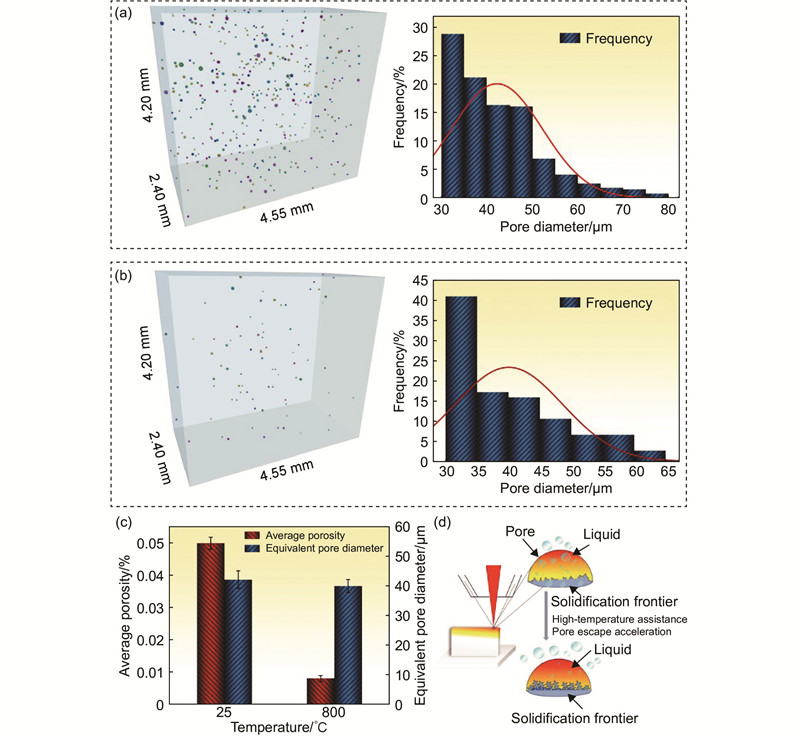
The TiAl4822 (Ti-48Al-2Cr-2Nb) alloy, renowned for its exceptional high-temperature mechanical properties and low density, stands out as a highly promising candidate for critical aerospace components. However, its high chemical reactivity and inherent room-temperature brittleness pose significant challenges to the conventional manufacturing of large and complex geometries. Laser directed energy deposition (LDED), characterized by its high fabrication efficiency and remarkable process flexibility, has emerged as a crucial approach for preparing TiAl4822 alloy components. Nevertheless, the rapid melting-solidification cycle during LDED induces a substantial temperature gradient and residual stress, which results in component cracking. Currently, there is no well-established method to completely prevent crack formation. In this study, a dense and crack-free thin-walled TiAl4822 alloy component with dimensions of 30 mm×25 mm×6 mm is successfully fabricated using the whole high-temperature-assisted LDED technique. An investigation is conducted on their macro-morphology, microstructure, porosity, and microhardness. The results reveal that the thin-walled TiAl4822 alloy specimen prepared by LDED at room temperature is prone to brittle fracture primarily through cleavage, and its microstructure mainly comprises fine equiaxed grains. After implementing whole high-temperature assistance at an integral temperature of 800 ℃, the grains in the deposited layer transform from bottom to top into inclined columnar grains. The porosity is significantly reduced from 0.05% to 0.008%, accompanied by a more uniform pore-size distribution, and no macroscopic cracks are observed on the surface. Concurrently, the microhardness decreases from 390.46HV0.2 to 354.94HV0.2, which can be attributed to grain coarsening, a decrease in grain-boundary density, and precipitate evolution under high-temperature conditions. Overall, the integral high-temperature-assisted LDED effectively inhibits crack initiation and the formation of large pores while homogenizing the microstructure, providing a novel pathway for high-density, high-performance TiAl4822 preparing.
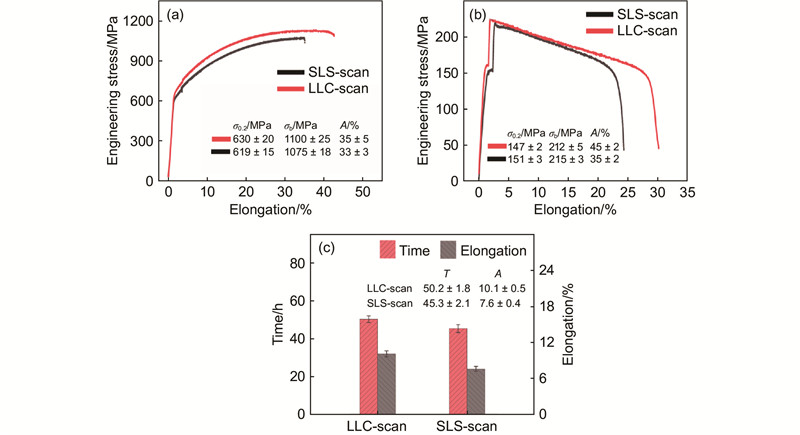
This study systematically investigates the effects of long-line and short-line scanning strategies on the microstructure and mechanical properties of GH5188 superalloy fabricated by laser powder bed fusion (LPBF). Metallography and SEM results reveal that both strategies produce mixed microstructures composed of columnar and equiaxed grains. Due to the shallower melt pool and insufficient remelting, the short-line strategy retains finer grains at the melt-pool center, leading to further grain refinement (17.17 μm). In contrast, the long-line strategy provides a more stable heat-flow direction, resulting in stronger〈001〉texture development along the build direction and a slightly larger average grain size (20.86 μm). Mechanical testing shows that the two strategies lead to similar tensile strength and ductility at room temperature. At 980 ℃, the tensile strengths are comparable, while the elongation of the long-line specimens is 28.6% higher than that of the short-line specimens. Under the 927 ℃/90 MPa stress rupture condition, the long-line specimens exhibit a significantly longer rupture life (50.2 h±1.8 h) and higher ductility (10.1%±0.5%) than the short-line specimens (45.3 h±2.1 h; 7.6%±0.4%). Cross-sectional analysis shows that the short-line specimens contain more densely distributed cracks, along with pronounced carbide precipitation and coarsening at grain boundaries, indicating higher grain-boundary damage sensitivity. Fractographic analysis further confirms that cracks preferentially propagate along grain boundaries. These findings clarify the microstructural origins of high-temperature performance differences and provide guidance for optimizing LPBF scanning strategies for GH5188 alloy.
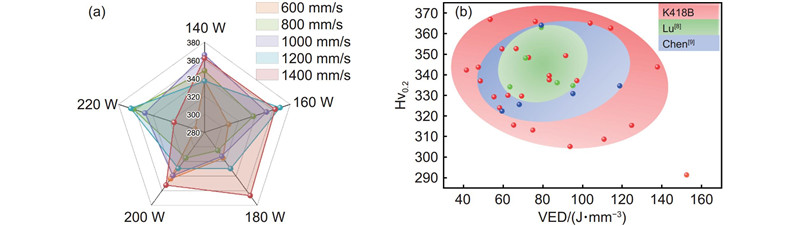
The K418B superalloy is fabricated utilizing laser powder bed fusion (LPBF) technology, and an analysis is conducted to examine the impact of process parameters on microdefect, density, microstructure, and hardness by OM, SEM and hardness tester. This is achieved by varying the laser power (ranging from 140 W to 220 W) and scanning speed(between 600 mm/s and 1400 mm/s). The findings reveal that both laser power and scanning speed significantly influence the relative density and defect distribution of the samples. Specifically, low energy density leads to the formation of irregular pores, whereas high energy density is associated with the emergence of spherical pores and solidification cracks. Excessive or insufficient volume energy density (VED) results in decreased density and impaired performance. The optimal processing conditions are identified as a laser power of 180 W and a scanning speed of 1400 mm/s, under which the sample density exceeds 99.95%, with minimal surface defects and only a small quantity of solidification cracks. Microstructure reveals distinct melt pool boundaries and cellular structure, accompanied by a Vickers hardness of 366.8 HV0.2. Notably, the grains at the melt pool boundaries are coarse, with cellular columnar crystals spanning multiple melt pools, indicating rapid solidification. The hardness initially increases and then decreases with VED, aligning with changes in pore content and density. The study attributes cracks primarily to thermal stress and provides a foundational basis for optimizing LPBF processing parameters of K418B alloy, holding potential engineering applications for enhancing the manufacturing quality of critical aero engine components.
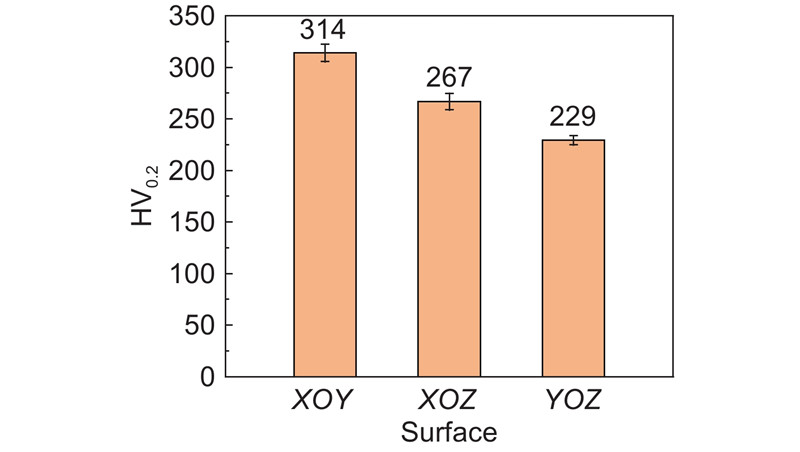
IN718 alloy components are widely employed in high-temperature parts for aerospace applications. However, traditional machining methods are not only time-consuming but also lead to inefficient material utilization. This study introduces the fabrication of IN718 alloy through wire-laser directed energy deposition (W-LDED) technique. The alloy’s phase composition, microstructure, types of precipitated phases, and grain characteristics are characterized using X-ray diffraction, scanning electron microscopy, energy-dispersive spectroscopy, and electron backscatter diffraction. The mechanical properties of the alloy are evaluated using a universal tensile testing machine and a microhardness tester. The matrix of the IN718 alloy consists of the γ phase, with Laves precipitate phase located at the grain boundaries or sub-grain boundaries. Notable differences in surface microstructures and properties are observed across various planes. The XOY surface predominantly exhibits equiaxed grains with the smallest average grain size, whereas the XOZ and YOZ surfaces comprise a mix of equiaxed grains and coarse columnar grains, with the YOZ surface displaying the largest average grain size. The highest tensile strength, reaching 842.5 MPa, is recorded along the Y direction, accompanied by an elongation of 17.5%. Conversely, the highest elongation, at 29.5%, is noted in the X direction, with a tensile strength of 818.7 MPa. The hardness values of the XOY, XOZ, and YOZ surfaces are 314HV0.2, 267HV0.2, and 229HV0.2, respectively.
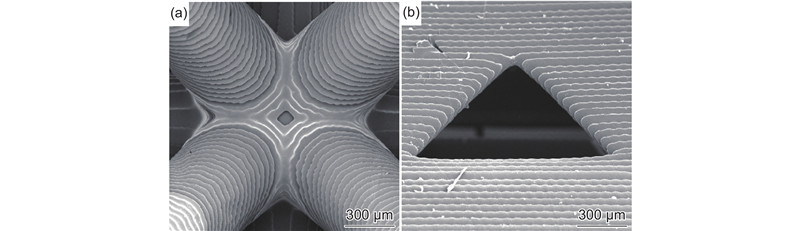
Integration of polymer-derived SiOC(Fe) ceramic technology with 3D printing successfully enables the development of a photosensitive polymer precursor resin modified with vinyl-ferrocene (VcFe). This resin combines low viscosity, high photosensitivity, and excellent curing strength, enabling fabrication of precursor models with complex geometric structures and micro-nano features. Following pyrolysis at 1000 ℃ in an argon atmosphere, structurally intact and uniformly shrunken SiOC(Fe) ceramic components are obtained, with a mass retention rate of 45.27%, a density of 1.89 g/cm3, and a linear shrinkage of 32.94%. The study systematically investigates phase evolution and volumetric shrinkage behavior during pyrolysis and characterized the ceramic hardness (achieving 5.93 GPa after pyrolysis at 1000 ℃). This work effectively validates the feasibility of fabricating complex-structured SiOC(Fe) ceramics via 3D printing combined with polymer-derived ceramic technology, providing guidance for its practical application.
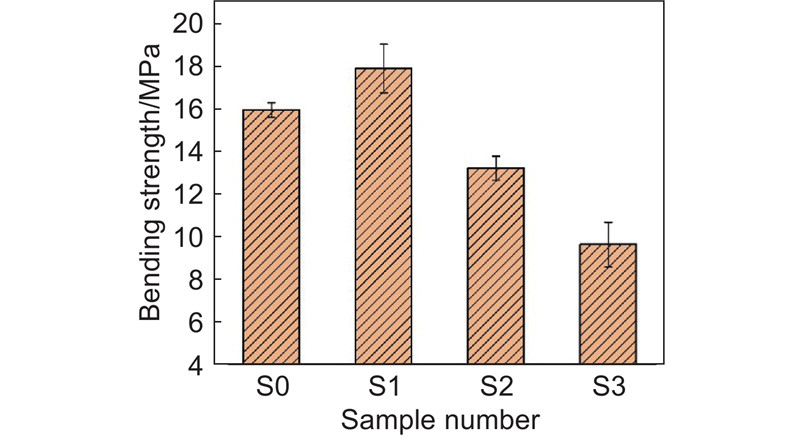
Silica-based ceramics are widely used in radome applications due to their excellent dielectric properties and thermal stability. However, traditional ceramic forming techniques face significant challenges in fabricating components with complex geometries. To improve the forming quality and mechanical properties of silica ceramics, this study employs Digital Light Processing (DLP)-based additive manufacturing to investigate the effects of different reinforcement phases. Using photosensitive resin as the matrix, composite ceramic samples are prepared by incorporating mullite particles, aluminum nitride particles, and alumina-coated particles as reinforcements. The phase composition, microstructure, bulk density, and flexural strength of the samples are systematically characterized. The results indicate that the type of reinforcement significantly affects the crystallization behavior of cristobalite and the densification process of the ceramics. Among all reinforcements, mullite particles yield the best overall performance, with vertical and horizontal shrinkage rates of 8.73% and 8.66%, open porosity of 17.44%, a bulk density of 1.80 g/cm3, and a maximum flexural strength of 17.94 MPa.
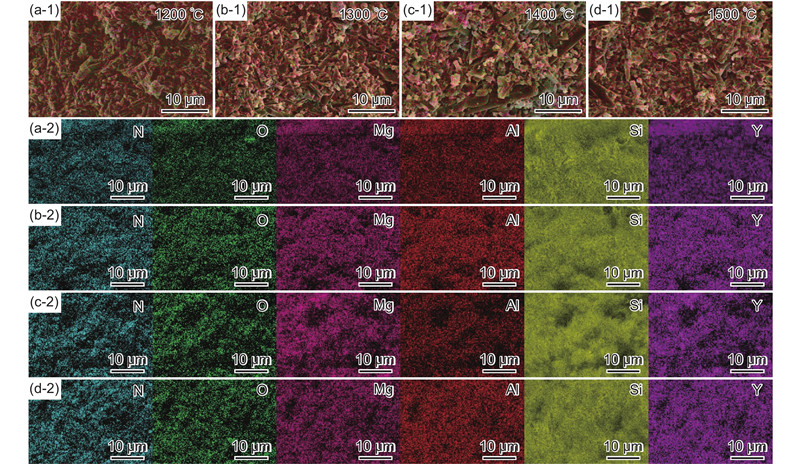
Additive manufacturing technology provides a novel approach for the production of complex-structured silicon nitride ceramics. In this study, the microstructural and strength evolution of additively manufactured silicon nitride after continuous thermal exposure for 24 hours in an oxygen-containing atmosphere at 1200-1500 ℃ are investigated. The morphology, phase compositions and element distribution are characterized by SEM, XRD, EBSD and EPMA. The results show that with increasing exposure temperature, α→β phase transformation occurs, and the volume fraction of β-Si3N4 increases from 63.02% to 74.15%. Meanwhile, the grain size of silicon nitride grows from 1.33 μm at 1200 ℃ to 1.97 μm at 1500 ℃. The flexural strength exhibits a rise-then-fall trend with increasing temperature, reaching a peak value of 722.67 MPa at 1200 ℃ and dropping to a minimum of 242.67 MPa at 1500 ℃, which represents a reduction of approximately 66.00% compared to the unexposed condition. Grain coarsening, as well as the formation of pores and microcracks during thermal exposure, are the primary causes of strength degradation. In addition, high-temperature oxidation reactions lead to the formation of mechanically weak SiO2 phases and introduce dimensional inaccuracies, further compromising the mechanical performance of the additively manufactured silicon nitride. As a result, flexural strength continues to decrease with increasing exposure temperature. This study reveals the microstructural and mechanical evolution mechanisms of additively manufactured silicon nitride ceramics under extreme high-temperature service conditions, providing a theoretical foundation for improving their service reliability and process optimization.
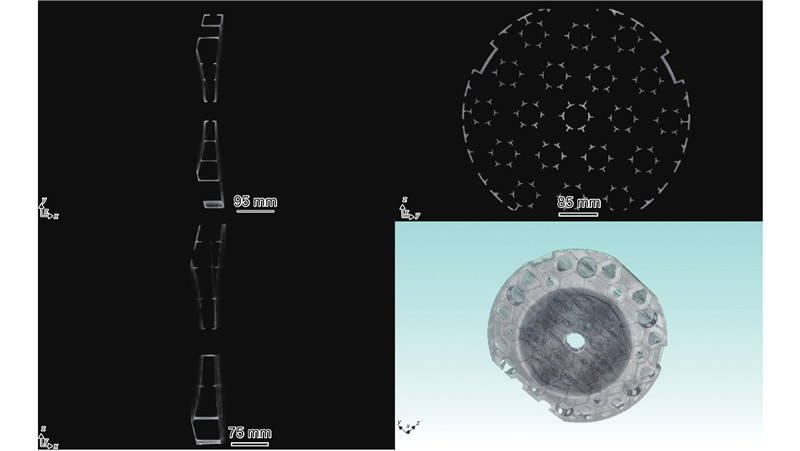
The additive manufacturing process offers a solution for fabricating complex hollow structures that are challenging to realize through traditional ceramic preparation methods. However, defects are often inevitable during the additive manufacturing process. In this study, silicon carbide ceramics with complex hollow structures are prepared using the stereolithography (SLA) additive manufacturing process. Industrial computed tomography (CT) non-destructive testing techniques are employed to observe and analyze macroscopic defects, such as cracks. The initiation and propagation mechanisms of cracks are investigated, and the influence of structural features on crack propagation is explored. The results indicate that printing corners and holes in the component are weak regions prone to stress concentration, which can lead to crack formation or further cracking. Therefore, particular attention should be paid to the printing process and the removal of residual powder. Through process optimization such as structure optimization and printing speed, especially the optimization of speed gradient in weak areas, it is helpful to avoid the occurrence of defects such as cracks.
|
Founded in 1981 (Bimonthly) ISSN 1005-5053 CN 11-3159/V Sponsored by Chinese Society of Aeronautics and Astronautics & AECC Beijing Institute of Aeronautical Materials |